Canada's Greenland Dilemma
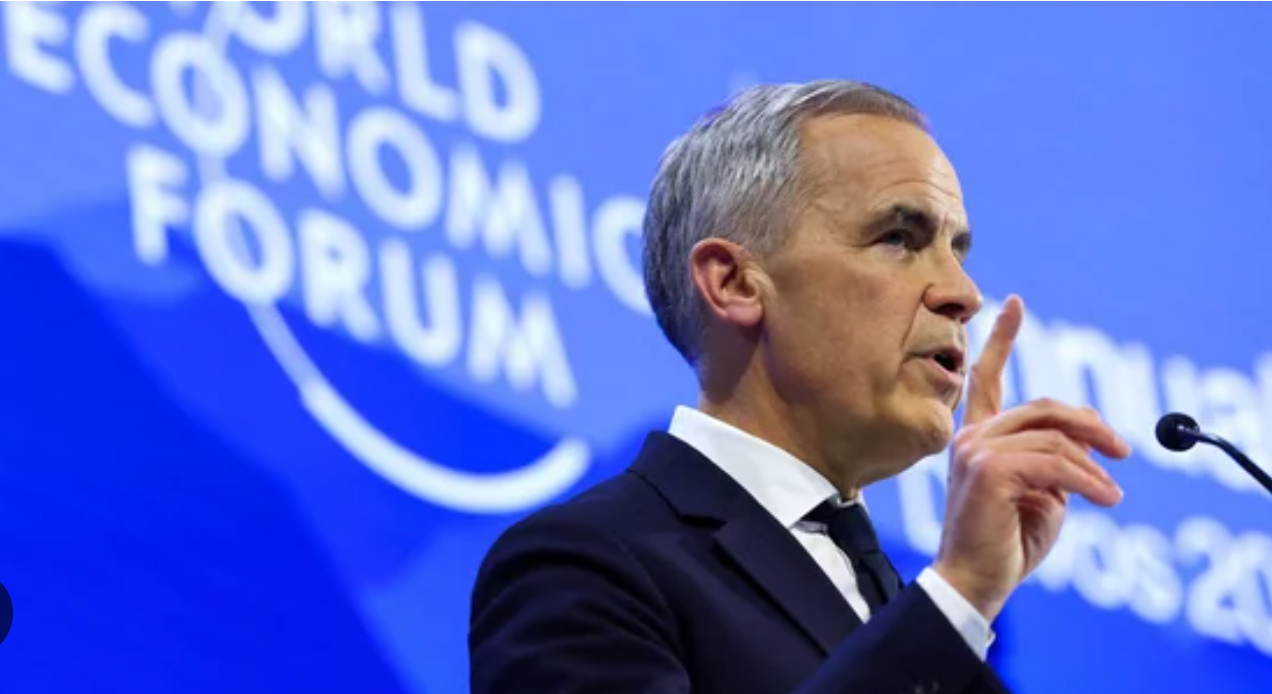
Mark Carney's Davos speech set off a firestorm of discourse while highlighting the two strategies available to weaker powers - ally with other midsize powers, or subordinate to a hegemon. Surprisingly to many, he chose to very publicly build a coalition against the US-led order. This seemed a brave and maybe even foolhardy move to many observers considering Canada's reliance on trade with the US, responsible for three quarters of their exports. Tariffs could do a lot of damage to the Canadian economy.
But looking at things from Canada's perspective, we can see why speaking out may have seemed like the least risky of a bunch of bad options. Speaking out perhaps raised the risk of retaliatory tariffs which would seriously damage the Canadian economy. But the status quo offers threatens being continuously shaken down by a mob boss - and, potentially, a devastating war.
To understand why this might be the case, we should start by asking what kind of leader Trump is. Invading Canada would not be a productive thing to do from the perspective of the US. But I don't see much evidence Trump cares much about US interest.
When he threatens NATO and makes countries pay him personally a billion dollars to join a Board of Peace, he's not doing that because it strengthens the situation of the United States. And he's not slapping haphazard tariffs on companies so they have to beg him for exemptions (often providing positive media coverage or bribes in exchange) because it helps America.
He's doing those things because they strengthen his personal patronage networks.
It's fitting that Trump's first name literally starts with Don as if he was born to be a mobster. Like Trump, mobs do not work by building impersonal and functional institutions. They work through patronage networks and personal reliance on a specific leader. In the long run, this produces instability as the death of a leader often provokes a damaging power struggle. That's one reason mob-style countries often face instability and slow, unequal growth. But they are effective at extracting wealth and redistributing it upward.
He doesn't want the US to have institutions which will last for generations. He wants to personally enrich his inner circle. Whenever there is a tradeoff between the interests of the United States and that of his family and cronies, he doesn't hesitate to sacrifice the resources of the US (including international goodwill and reputation, trading relationships, and military partnerships) for his own benefit.
Some think Trump is threatening to conquer Greenland because he is off his meds or has extreme dementia, or maybe because it looks big on a map. And while I don't want to downplay this (he forgot the name "Greenland" at least four times at Davos), I think there may be a somewhat coherent strategy at play here which could work out for him.
That doesn't mean it would benefit us. Strongmen don't wage war for the same reasons democracies do. For instance, wars give totalitarians increased domestic control. Opponents can be painted as foreign enemies, resources can be given to friends, and the military can be strengthened and subordinated. And Canada is a juicy target for this style of expansion.
Canada has only 1/9th the population of the United States and are less heavily armed. 90% of their population lives within 100 miles of the US border, which is the longest in the world. Canada's wealth comes from natural resources, which can be easily expropriated and redistributed to Trump's allies. Taking Canada would make the US the largest country on Earth - something obvious on any world map which might boost nationalism and cement Trump's legacy. And imagine how difficult fleeing the US as a dissident would become if the southern border, blocked by a wall and patrolled by drones and soldiers, becomes the only exit on the whole continent.
The deal that Trump seeks in Greenland would allow him to place troops there with more limited oversight. And by consistently making the case that the US should own the island, he is building support among his own base for a potential future invasion. Some people view his talk as bluster or think he's backed down. But we've seen that fascists don't really back down. They keep coming back again and again until they get what they want.
We saw it with Trump increasing his unilateral military authority, firing officials he doesn't like without Congressional oversight, building a politicized justice system, invading Venezuela and extracting the oil, and countless other issues where it seemed like he "lost" before he suddenly won - and only in retrospect was it clear how prior attempts built the groundwork for eventual success.
So he didn't get Greenland this time. But he is building the expectation that the US will have additional troops there (making it easy to do a Crimea-style "special operation" in the future), rooting out the generals who won't stand for that, and building the case domestically why it's important. It's the same playbook used by countless aggressive leaders consolidating power.
This poses a bigger threat to Canada than anywhere besides Greenland itself. Those in the military still opposed to Trump would become likely to leave if their job were crushing Greenland's democracy, leaving Trump with a totally loyal military that has no problem steamrolling civilian opposition. It would also play an important role in psychological warfare against Canada by creating a feeling of encirclement and sense of the hopelessness of resistance among Canadians.
Militarily, perhaps it is Europe not Russia which Trump seeks to defend against using Greenland. Bases on Greenland could complete a cordon around Canada making it difficult (if not impossible) for Europe to send reinforcements or supplies to Canada, should the war drag on long enough for that to become an issue.
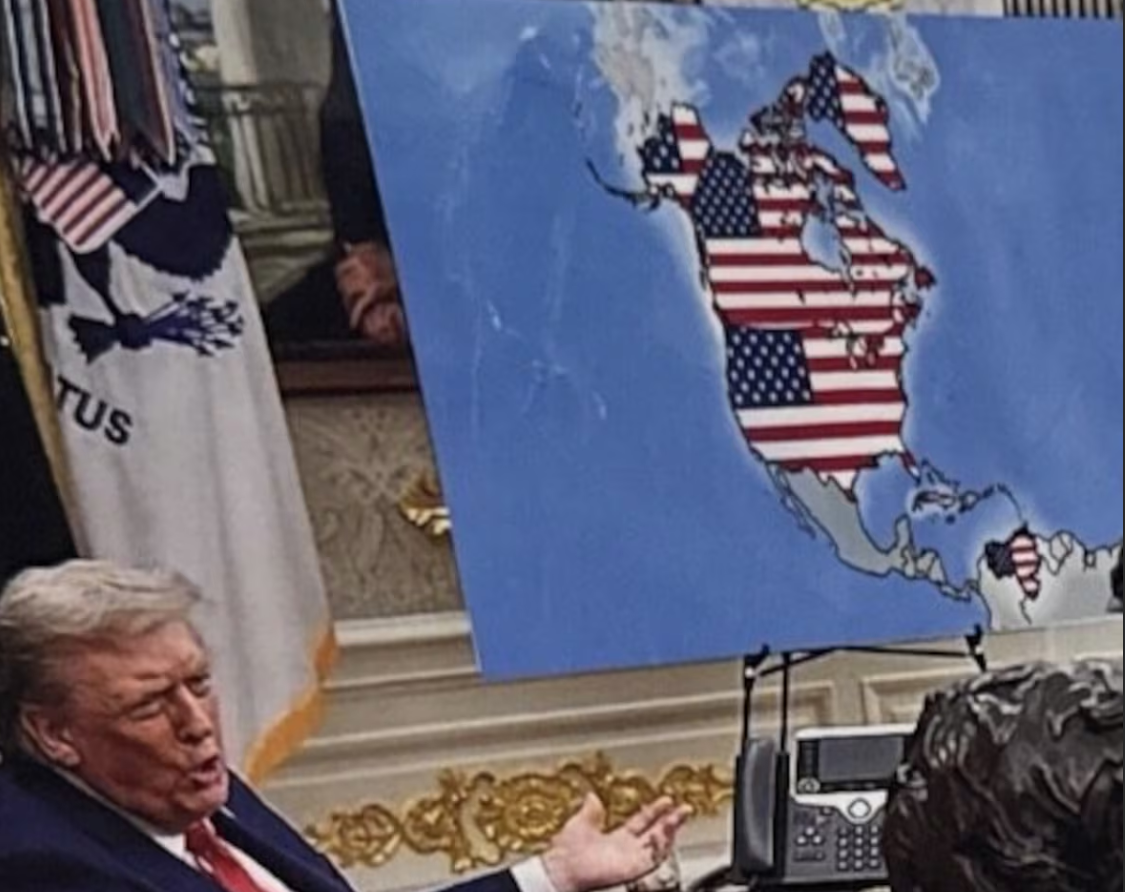
We don't only see evidence of his intention to conquer Canada in public speeches, maps he releases, threats against Canadians, and military posturing in Greenland. He's even collaborating with and funding an Alberta separatist movement. It's almost funny that he's following the fascist expansion pack to a T - build a secret police, purge the military, encourage separatist movements in a divide-and-conquer strategy, and militarily encircle target territories. From the Financial Times:
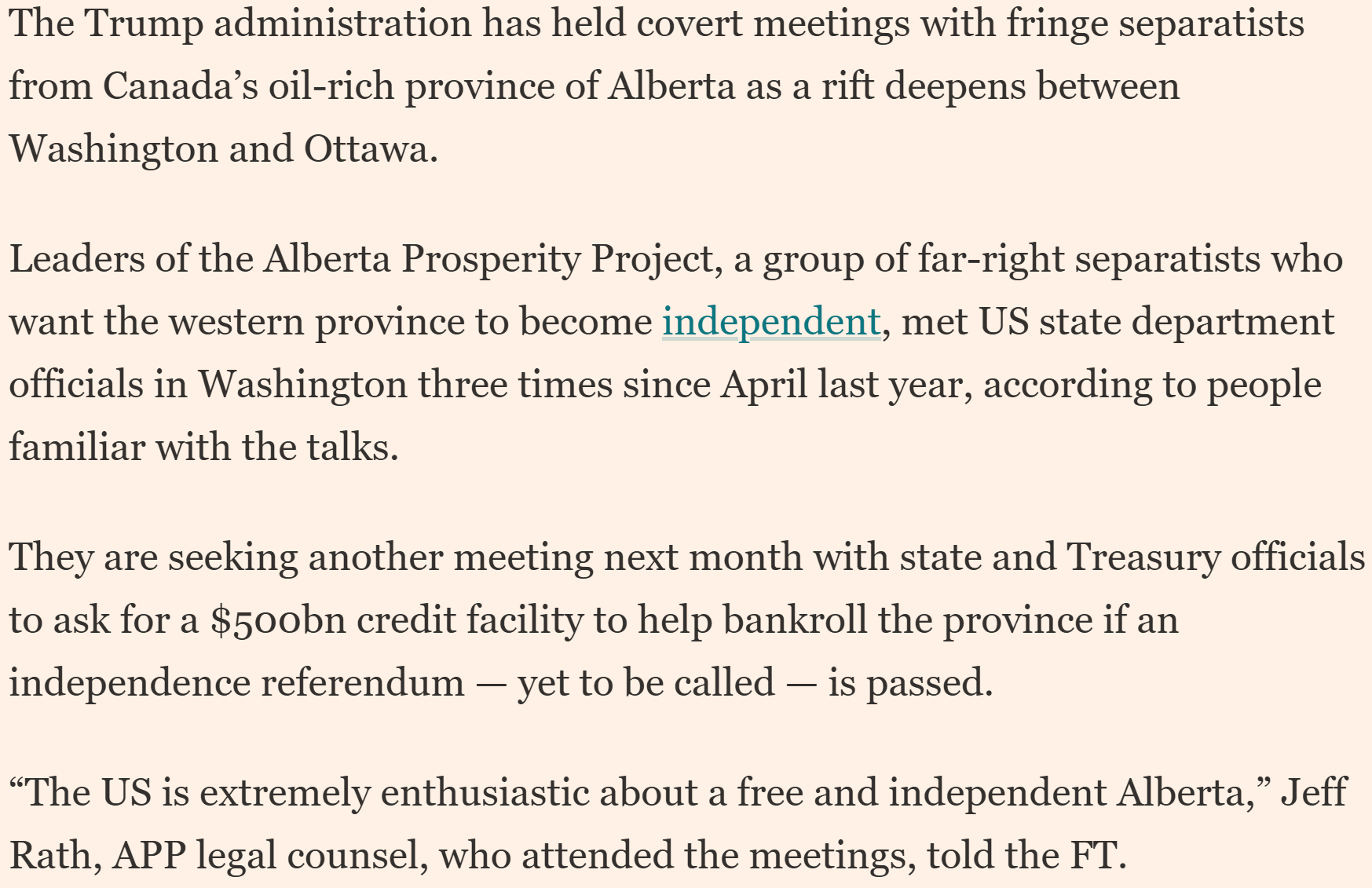
I think these people would do well to remember that leaders of Hitlerite factions in neighboring countries were often sidelined once the conquest was done. But if they knew history, they'd probably do a lot of things differently.
Canada has the most to lose by speaking against Trump. But it also has the most to lose by remaining silent. I think Carney sees the writing on the wall, forcing him to speak up now - or forever hold his peace.